Direct Market Linkage: Promote farmer-to-consumer (F2C) or farmer-to-retail models using digital platforms and cooperatives. This cuts out middlemen and ensures better pricing. Government Support: Subsidies for fertilizers, tools, and irrigation. Access to low-interest loans and crop insurance. Training and awareness on sustainable farming practices. Youth in Agriculture: Encourage the new generation to view farming as a business, not a burden — by teaching agri-entrepreneurship in schools and colleges. Respect & Recognition: National campaigns to appreciate farmers. Celebrating “Farmer’s Day” and promoting local farm heroes through social media and television can inspire pride in farming.
In the Heart of the Soil: The Story of Nepal’s Farmers
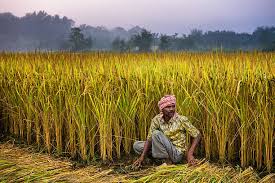
Every morning, before the sun rises above the Himalayas, and while the cities still sleep under a blanket of quiet, a farmer in Nepal is already awake — with mud on his hands and hope in his heart.
This is not just a job.
It is not just a way to earn.
Farming is a life of silent sacrifice. A devotion passed down through generations.
The Life Behind the Fields
The Life Behind the Fields
In a small village of Rolpa, Ganga Thapa tills her land alone. Her husband left for the Gulf five years ago, and she now grows maize and mustard to feed her two children and elderly mother-in-law.
“म मल पाउँदिन, न बजारमा उचित मूल्य। काम पनि गर्छु, घाटा पनि सहन्छु। तर खेत जोत्न त सक्नै पर्छ।”
– Ganga, Age 37
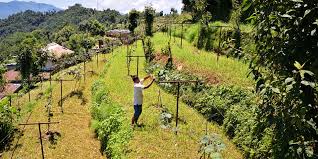
Like her, millions of farmers across Nepal — from the scorching plains of Terai to the steep terraces of the hills — work the soil, not for wealth, but for survival.
They don’t ask for luxury.
They ask for fairness.
They want their sweat to matter.
A Nation Fed, But the Feeders Go Hungry
It is heartbreaking that in a country where more than 65% of the population is engaged in agriculture, the farmers themselves often cannot afford to eat what they grow.

Did You Know ?
- Nearly 30% of Nepali farmers live below the poverty line.
- Over 70% of fruits and vegetables in cities come from Indian imports, while local produce rots due to market inaccessibility.
- In Kalikot, a farmer gets NPR 10 for a kg of orange, while it sells for NPR 100+ in Kathmandu.
What’s missing is not skill.
What’s missing is support. Infrastructure. Fair pricing. Dignity.

But There is Hope — And Opportunity
Nepal’s soil is rich. Its water is pure. The farmers are hardworking.
What we need is the right connection between knowledge, technology, and respect.
Stories of Change:
- In Kavre, a women-led organic farming group now exports ginger to Germany — earning five times more than before.
- In Bardiya, a farmer named Ramesh built a polyhouse with government subsidy and now grows off-season tomatoes. His children now study in Kathmandu.
- In Sindhuli, youth returnees from Malaysia started a goat farm, applying what they learned abroad, and now employ 12 locals.
These are not isolated stories. They are seeds of transformation.

How Can We Uplift Nepal’s Farmers?
Let’s stop treating farming as a fallback job. Let’s treat it as an enterprise.
✅ Here’s what needs to be done:
- Create Direct Farmer-Consumer Markets
→ Farmers should sell directly to buyers via local markets or digital apps.
→ Example: “Hariyo Bazaar” in Lalitpur connects 300+ farmers with urban consumers directly. - Invest in Infrastructure
→ Cold storage, rural roads, irrigation — not just promises, but action.
→ One cold storage in Chitwan increased vegetable shelf life by 5–7 days and farmer income by 30%. - Empower Women & Youth
→ Train women in farm entrepreneurship.
→ Support returning migrant workers in agri-startups.
→ Add agri-business courses in colleges. - Celebrate the Farmer
→ Let media highlight farmer stories — not just politicians and celebrities.
→ Let schools organize “Farm Visit Days” and children learn where food really comes from.
Building a Just Farm Economy for All
Imagine a system where:

- The farmer gets paid fairly
- The consumer gets fresh and chemical-free food
- And the trader earns with honesty
This is possible.
It only takes transparency, cooperation, and a shared belief that everyone along the food chain matters.
Let’s bring digital technology to our villages.
Let’s make local cooperatives strong again.
Let’s build a Nepal where a farmer is proud to be called a farmer.
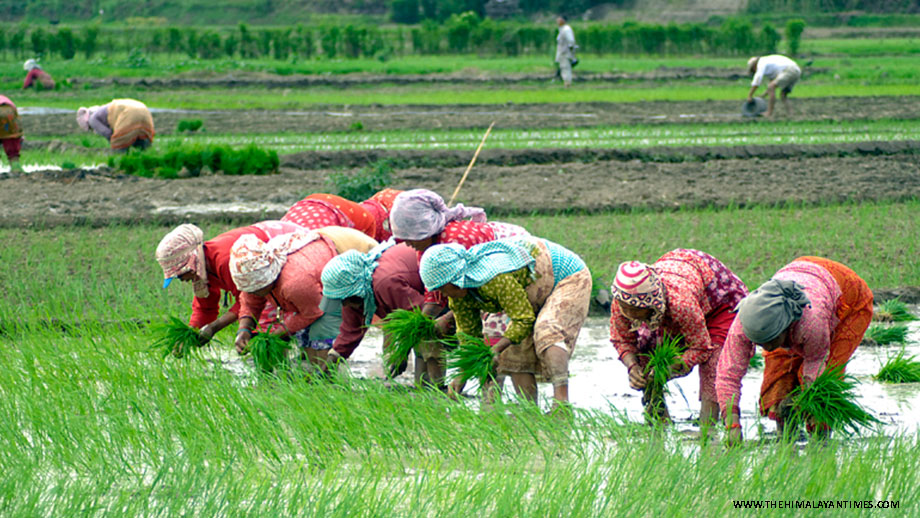
❤️ A Salute to the Hands That Feed Us
We eat three times a day.
But we thank the farmer rarely — if ever.
Today, take a moment to think:
- Who grew the rice on your plate?
- Who watered the spinach?
- Who carried the harvest down steep hills so you could cook tonight?
They are not just producers — they are providers of life.
Let us not pity the farmer.
Let us stand beside them. Invest in them.
Buy from them. Vote for them.
And one day, we’ll see a Nepal where a farmer walks with pride, not burden.
When the farmer rises, Nepal rises.
“हामी किसान हौं — हामी माटोबाट सुन फलाउँछौं, तर आफै भोकै बस्नुपर्छ।”
– Bhola Yadav, Sarlahi DistrictIt’s time to:
✅ Buy local farm produce
✅ Support farmer cooperatives
✅ Raise our voice for fair pricing
✅ Use tech to reduce exploitation
✅ Celebrate “Proud to be a Farmer” campaigns
Opportunities to Empower Nepali Farmers
With modernization and market linkage, small farmers can scale and sustain their livelihoods.
1. Agro-Tech Innovation
Smart Krishi App – a Nepali mobile app with over 1 lakh downloads, provides farmers with info on crops, pests, weather, and market prices.
This digital bridge has helped farmers in Chitwan and Jhapa to choose the right time to harvest and sell.
2. Organic Farming in Kavre
The Kavre Organic Farmers Cooperative has been exporting organic turmeric and ginger to Europe. With technical support from ICIMOD and Local Initiatives for Biodiversity (LI-BIRD), farmers are earning up to 300% more than from conventional farming.
How to Uplift Farmers’ Lives
Here are real changes and what’s working:

Case Study: Chitwan’s Cold Storage Model
The Chitwan Agriculture Cooperative Union (CACU) partnered with private investors to build cold storage facilities. Farmers now store surplus vegetables for longer and sell during off-seasons at better prices. Their income increased by 20–30% in just two years.
Women Farmer Empowerment in Sindhupalchok
Through the Heifer International Nepal project, over 5,000 women were trained in goat and dairy farming. They formed savings groups, sold collectively, and now earn over NPR 10,000/month, lifting entire families out of poverty.
Farmers as the Backbone of the Nepali Economy
Agriculture remains the largest employment sector in Nepal, and smallholder farmers produce most of the country’s food.
The Daily Struggles of a Nepali Farmer
Farming in Nepal, despite being the backbone of the economy, is full of uncertainties and daily hardships.
🔍 Real Case: Sabitra Tamang (Makwanpur District)
Sabitra, a vegetable farmer, grows cauliflower and tomatoes on her 1.5 ropani land. Despite producing 300+ kg per season, she earns very little because she has to sell her harvest to middlemen who give her only NPR 20 per kg — while the same is sold for NPR 60+ in Kalimati Market, Kathmandu.
“मैले काम धेरै गरेँ तर बजार र मूल्य भने अरूले ठगेर लग्छन्।”
Fact:
- According to the Nepal Rastra Bank (2023) report, only 29% of farmers in Nepal have access to formal credit.
- More than 30% of perishable goods are lost post-harvest due to lack of storage, according to the Ministry of Agriculture & Livestock Development.